Physical Address
304 North Cardinal St.
Dorchester Center, MA 02124
Physical Address
304 North Cardinal St.
Dorchester Center, MA 02124


New Zealand First deputy leader and Regional Development Minister Shane Jones has refused to walk back remarks describing a proposed free trade agreement with India as a "butter chicken tsunami".
New Zealand First deputy leader and Regional Development Minister Shane Jones has refused to walk back remarks describing a proposed free trade agreement with India as a "butter chicken tsunami".
The remarks sparked a firestorm of condemnation from the Indian community, opposition politicians, and even his own coalition partners.
In a video circulating online, Jones said his party would "never accept" the free trade agreement, claiming that unrestricted immigration would drive down wages, clog roads, and overwhelm the health system.
"I don't care how much criticism I get… I am never going to agree with a butter chicken tsunami coming to New Zealand," Jones said during an interview with Reality Check Radio.
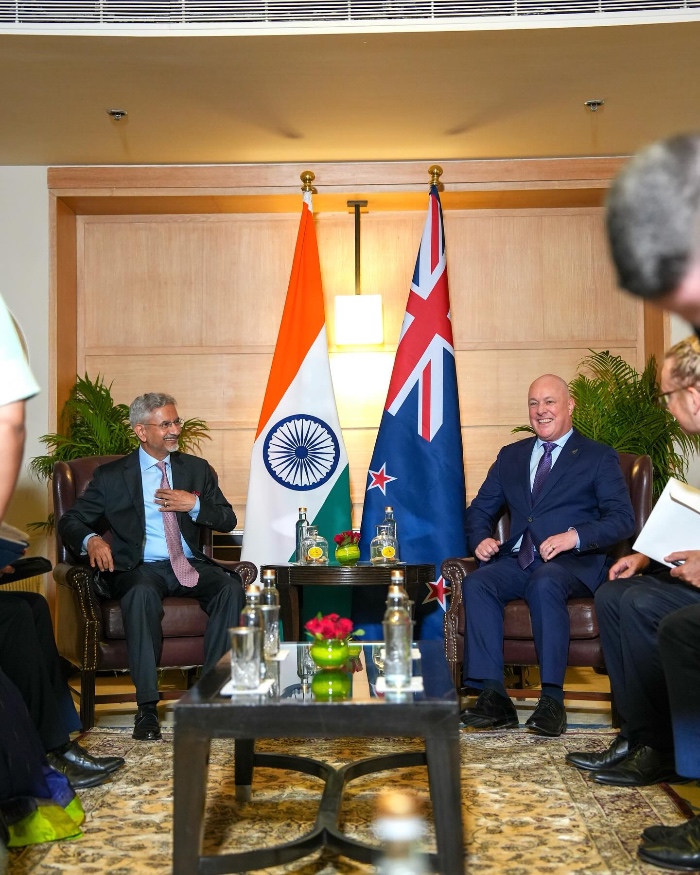
Prime Minister Christopher Luxon, speaking at his post-Cabinet media conference, said he had not seen the comments initially but described them as a "gross misrepresentation" of what the FTA was about.
He said Jones' language was "alarmist" and "unhelpful". Immigration Minister Erica Stanford, standing alongside Luxon, also said the comments were "not helpful."
Race Relations Commissioner Melissa Derby went further, calling the remarks outrageous and uncalled for, saying such rhetoric was dehumanising and did nothing to advance meaningful conversation on an important issue.
Labour leader Chris Hipkins was more direct. Hipkins called the comments "racist at the least" and urged Luxon to use stronger language in his response.
Far from apologising for his remarks, Jones leaned in. He acknowledged that fellow MPs had urged him to moderate his language, but insisted he gets "cut-through on debates by deploying hyperbole."
"The media will never cancel the Dalmatian Māori because he uses hyperbole and dismiss it as racism. Kiwis are flocking to my cause. Immigration, unfettered, unmitigated, has had a lot of negative impacts," Jones said.
The NZ Indian Business Association condemned Jones’ remarks. “Shane Jones’ “butter chicken” remarks fall short of the standard expected in public discourse, particularly from a senior politician,” the organisation said in a post on Facebook.
“Rather than constructively addressing concerns about the India Free Trade Agreement, the language used is interpreted as directed at a broader community rather than the policy itself.”
“The issue is not disagreement with the deal, but how that disagreement is expressed. Repeated use of culturally loaded language shifts the focus away from substantive debate and instead contributes to unnecessary division,” the Association said.
“New Zealand’s prosperity has long relied on openness, mutual respect, and constructive engagement with diverse partners. Trade agreements are not about displacing local industries, but about building balanced frameworks that create shared economic value,” they added.
Wellington is poised to sign the free trade agreement with India in New Delhi on April 27. The New Zealand government has described it as a "once in a generation" deal that would give New Zealand exporters access to a market of around 1.4 billion people.
NZ First has opposed the FTA and the government will need Labour's backing to pass the legislation through Parliament.
The deal would eliminate or reduce tariffs on 95% of New Zealand exports to India — among the highest levels secured in any Indian trade agreement. More than half of those exports, including lamb, wool and many forestry products, including kiwifruit, apples and mānuka honey, would become duty-free immediately, rising to 82% over time.
On the Indian side, the country gains full duty-free access for 100% of its exports to New Zealand, with key sectors including textiles, pharmaceuticals, engineering goods and IT services expected to benefit. The deal aims to double bilateral trade to $5 billion within five years and is projected to attract nearly $20 billion in foreign investment over 15 years.
The agreement also includes provisions for a limited numbers of skilled Indian workers to enter New Zealand on temporary visas. The Visa provisions are capped at 5,000 and according to NZ Indian Business Association the agreement allows for only around 1,600 to 1,700 migrants per year.
Jones slammed the FTA over the visa provision. “Our country has 5.4% generic unemployment – 160,000 kiwis on the dole queue,” Jones said in a social media post.
“We should develop our own resources and our own people. Only in exceptional circumstances should we ever contemplate opening the gates for further immigration. Immigration should be based on bringing the people we need, not those who need us.”