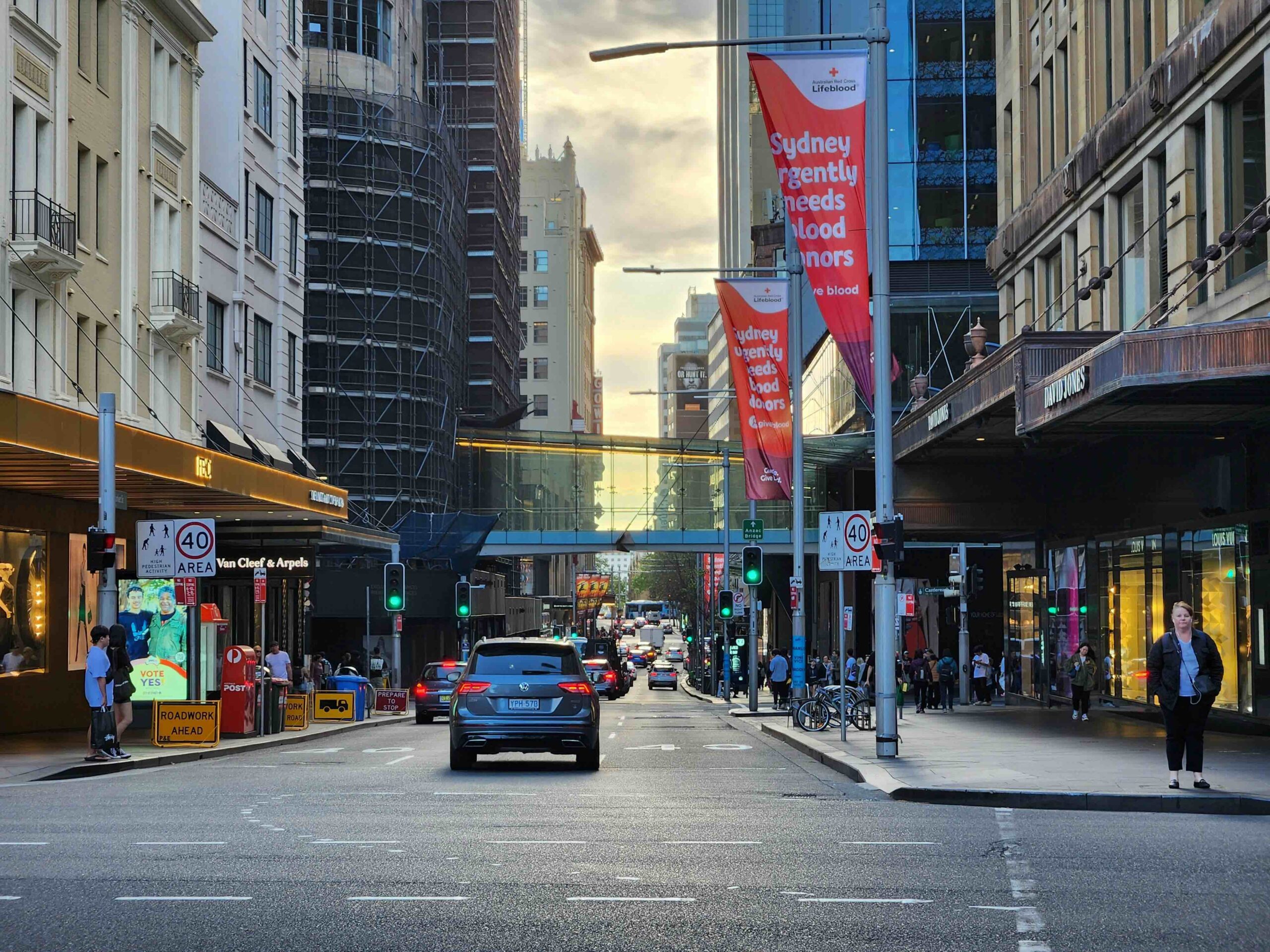
Starting July 1, 2025, Australian road rules are getting a major makeover. New laws are rolling out with tougher fines, smarter tech enforcement, and stricter speed limits aimed at making our roads safer for everyone.
Across the country, authorities are cracking down on dangerous driving behaviours with a strong focus on mobile phone use, speeding, and how drivers pass roadside assistance vehicles.
AI-powered cameras will be expanded or introduced in multiple states, catching drivers holding or touching phones, even at red lights. Fines can exceed $1,000, plus five demerit points, and repeat offenders risk licence suspension.
Speed limits in school and high-pedestrian areas are being reduced in several states, reflecting a nationwide push for safer streets
Victoria is extending its Road Rule 79A, requiring drivers to slow to 40 km/h when passing tow trucks, breakdown services, and roadside workers with flashing lights. South Australia and other states have similar rules, with fines up to $961.
According to the Insurance Manufacturers of Australia (IMA) data, Failure to give way at an intersection or other areas on the road is one of the biggest causes of motor vehicle damage and subsequent insurance claims. In 2004 alone, over 27,000 car insurance claims were lodged due to this road rule infraction.
“Failure to give way may be associated with driver inattention or distraction, complacency, speeding or rushing, inexperience and poor visibility. Misunderstanding this common road sign could be another factor,” says RACV Driver Education and Development Manager Silvia Morris.
“Knowing who should give way is essential at crossroads, T-intersections, roundabouts, when merging and at other points on the road. Getting it wrong or not being sure about the give way road rules can lead to hesitation, misjudgement or a collision,” adds Morris.
Here’s a quick rundown of the headline changes to road rules from July 1, 2025, in each state:
- Slow to 40 km/h for Roadside Assistance: Drivers must now slow to 40 km/h when passing any stationary or slow-moving roadside assistance vehicles, including tow trucks and breakdown units, with flashing lights and visible workers. This applies to all roads, including freeways. Fines can reach up to $961, though no demerit points are applied.
Slow to 40 km/h for Roadside Assistance: Drivers must now slow to 40 km/h when passing any stationary or slow-moving roadside assistance vehicles, including tow trucks and breakdown units, with flashing lights and visible workers. This applies to all roads, including freeways.
Fines can reach up to $961, though no demerit points are applied.
- Fine Increases: Failure to wear seat belts will attract higher fines, and mobile phone use detection cameras will start detecting those not wearing seat belts. All traffic fines increase by 3.2% in line with CPI.
The fine for not wearing seat belts will go up to $423. Mobile phone use will attract a $423 fine and five demerit points, or $561 in a school zone.
- Average Speed Cameras for Light Vehicles: NSW becomes the first state to use average speed cameras for all vehicles, not just trucks. From July 1, cars and motorcycles on the Hume and Pacific Highways will be monitored, with fines issued for speeding.
- Ticketless Parking Fines Phased Out: Drivers will now receive immediate notice of parking infringements, ending the controversial ticketless system.
Fine Increases: Failure to wear seat belts will attract higher fines, and mobile phone use detection cameras will start detecting those not wearing seat belts. All traffic fines increase by 3.2% in line with CPI. The fine for not wearing seat belts will go up to $423. Mobile phone use will attract a $423 fine and five demerit points, or $561 in a school zone.
Average Speed Cameras for Light Vehicles: NSW becomes the first state to use average speed cameras for all vehicles, not just trucks. From July 1, cars and motorcycles on the Hume and Pacific Highways will be monitored, with fines issued for speeding.
Ticketless Parking Fines Phased Out: Drivers will now receive immediate notice of parking infringements, ending the controversial ticketless system.
- Fines Up 3.4%: Car registration and penalties for speeding, seatbelt misuse, and mobile phone use rise by over three per cent. Using a mobile phone while driving now costs $1,250. The Liberal government scrapped a decision by the former Labor government to freeze registrations and fines till September 2025.
- Lower Speed Limits in Tourist Areas: Speed limits drop from 50 to 40 km/h in popular tourist and residential areas, such as the Hervey Bay Esplanade.
- Enhanced Enforcement: AI cameras and other tech will target distracted driving.
Fines Up 3.4%: Car registration and penalties for speeding, seatbelt misuse, and mobile phone use rise by over three per cent. Using a mobile phone while driving now costs $1,250. The Liberal government scrapped a decision by the former Labor government to freeze registrations and fines till September 2025.
Lower Speed Limits in Tourist Areas: Speed limits drop from 50 to 40 km/h in popular tourist and residential areas, such as the Hervey Bay Esplanade.
Enhanced Enforcement: AI cameras and other tech will target distracted driving.
- Slow to 25 km/h for Roadside Assistance: Drivers must slow to 25 km/h when passing stationary breakdown vehicles with flashing amber lights, extending protections previously reserved for emergency vehicles.
Fines can reach $1,648 and seven demerit points.
Slow to 25 km/h for Roadside Assistance: Drivers must slow to 25 km/h when passing stationary breakdown vehicles with flashing amber lights, extending protections previously reserved for emergency vehicles.
Fines can reach $1,648 and seven demerit points.
- Major Speed Limit Reductions: Over 1,800 regional roads will see speed limits lowered as part of a three-year trial. Some highways drop from 100 km/h to 70 km/h. Existing limits of between 70 and 110km/h on the Margaret River to Prevelly corridor and Bayview Drive entering Gracetown will drop to 60km/h.
Speed limits at Augusta Town Centre will drop from 60 to 40 km/h in high-pedestrian zones.
- Heavier Penalties: Fines for mobile phone use rise to $700 and loss of five demerit points, and excessive speeding can now cost over $1,600.
- AI Enforcement: New cameras will monitor speeding, seatbelt use, and mobile phone violations.
Major Speed Limit Reductions: Over 1,800 regional roads will see speed limits lowered as part of a three-year trial. Some highways drop from 100 km/h to 70 km/h. Existing limits of between 70 and 110km/h on the Margaret River to Prevelly corridor and Bayview Drive entering Gracetown will drop to 60km/h.
Speed limits at Augusta Town Centre will drop from 60 to 40 km/h in high-pedestrian zones.
Heavier Penalties: Fines for mobile phone use rise to $700 and loss of five demerit points, and excessive speeding can now cost over $1,600.
AI Enforcement: New cameras will monitor speeding, seatbelt use, and mobile phone violations.