Physical Address
304 North Cardinal St.
Dorchester Center, MA 02124
Physical Address
304 North Cardinal St.
Dorchester Center, MA 02124

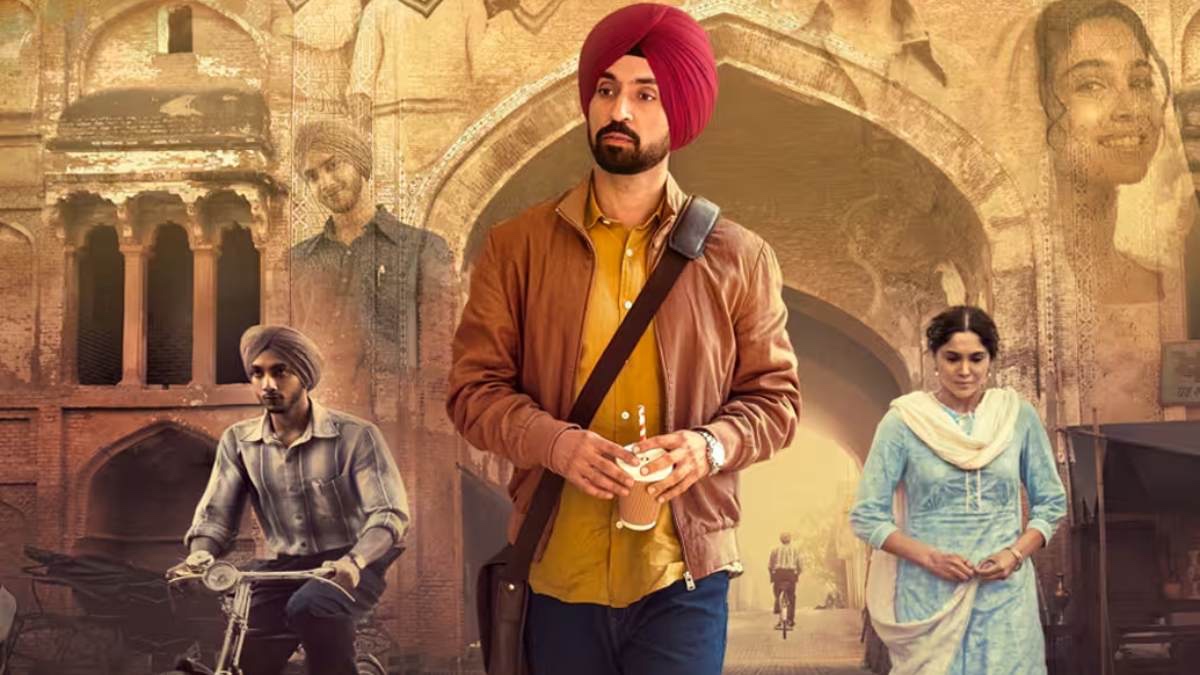
Main Vaapas Aaunga Review: Imtiaz Ali, Naseeruddin Shah and Diljit Dosanjh Turn Partition Grief Into Unforgettable Cinema.
Some griefs fade with time, while others become a part of our identity. Main Vaapas Aaunga tells the story of unspoken grief—a grief that Ishar has carried within him for seventy-eight long years. It is the grief of losing one's home, loved ones, and an entire way of life.
This grief of displacement stems from a line drawn across a map by colonial rulers in 1947. This line tore apart a nation, divided communities, and left millions stranded between memory and reality. Above all, it is the grief of an unfulfilled promise: the promise to return home one day, a promise that life never allowed him to keep.
For many Indians and Pakistanis whose parents and grandparents lived through Partition, this is not merely history. It is inherited trauma. Countless families left their homes believing they would return once the violence subsided, only to discover that the borders had become permanent. They rebuilt their lives from scratch as refugees, carrying stories of villages abandoned overnight, loved ones lost to unimaginable brutality, and homes that survived only in memory. Partition brought happiness to no one; it merely left scars that continued to echo across generations.
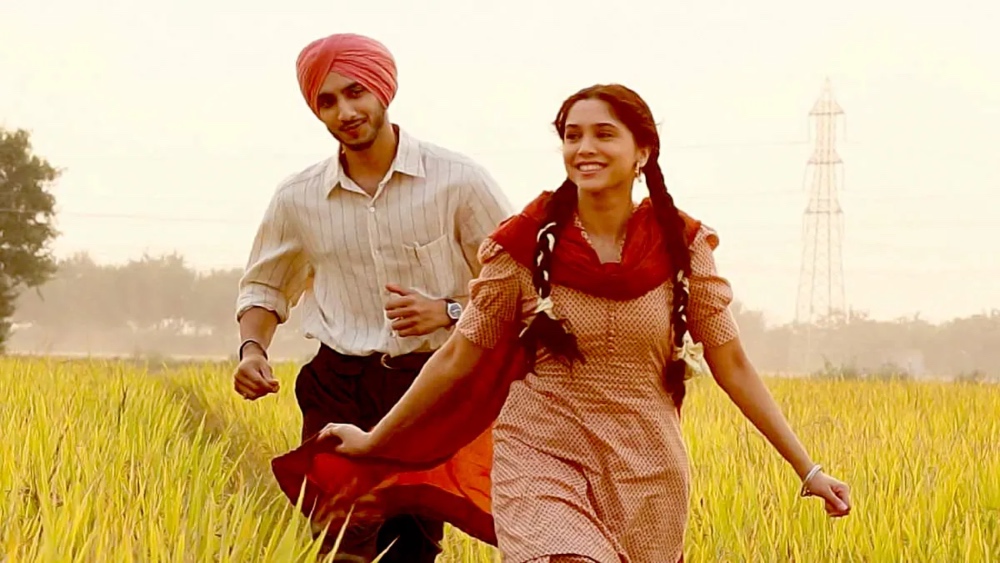
At the heart of the film is Ishar Singh (Naseeruddin Shah), once known as Keenu (Vedang Raina). In 1947, Keenu was an eighteen-year-old Sikh boy experiencing the first stirrings of love with Jiya (Sharvari), a Muslim classmate. Their romance is tender, innocent, and filled with dreams of a shared future. But history intervenes. As Partition engulfs the nation in chaos and violence, Keenu is forced to flee, leaving behind both his homeland and the woman he loves. Before departing, he promises that he will return.
Seventy-eight years later, Keenu is now the ninety-five-year-old Ishar, frail, bedridden, and battling dementia. Yet time has failed to diminish his longing. The promise he made as a young man continues to haunt him. His grandson Nirvair (Diljit Dosanjh) becomes both his confidant and his source of catharsis. Through Nirvair, Ishar attempts to confront a lifetime of unresolved sorrow, while Nirvair himself embarks on a journey of self-discovery. Their relationship forms the emotional backbone of the film, transforming a deeply personal story into one about generational healing and redemption.
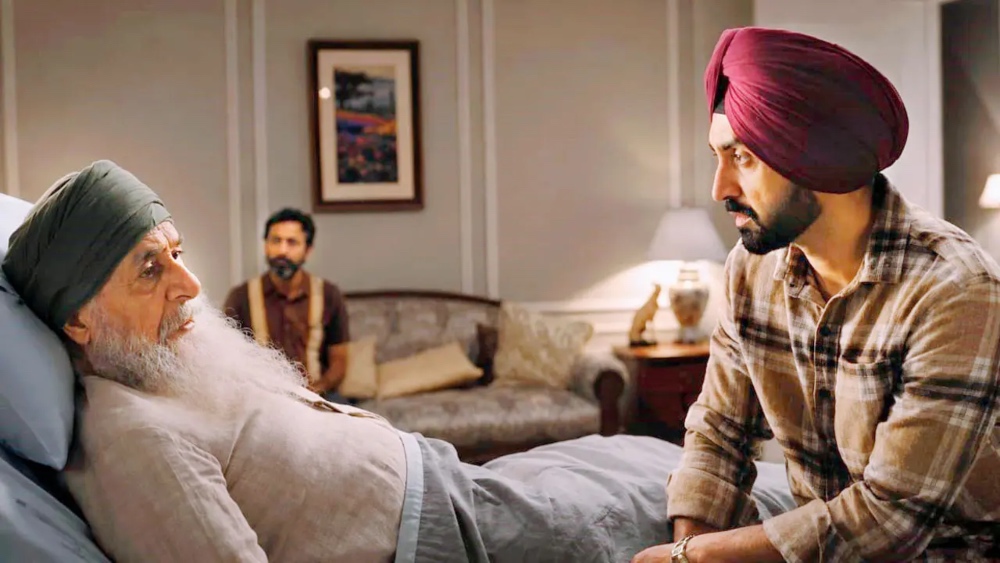
Naseeruddin Shah delivers one of the finest performances of his illustrious career. As Ishar, he communicates decades of pain through the slightest movement of his eyes and the pauses between words. Even when his character says very little, his face carries the weight of an entire century. It is a performance of remarkable restraint and emotional depth, reminding us why he remains one of the greatest actors Indian cinema has ever produced.
Sharvari and Vedang Raina bring warmth, innocence, and sincerity to the film's romantic portions. Their chemistry is effortless, evoking a kind of old-world romance that has become increasingly rare in contemporary Hindi cinema. Together, they create moments of tenderness that make the tragedy of their separation more heartbreaking.
Diljit Dosanjh's Nirvair is written with less dramatic complexity than Ishar, and the character occasionally lacks a fully developed arc. Yet Diljit delivers a deeply felt performance, grounding the film with quiet empathy. His scenes with Naseeruddin Shah are among the film's strongest, with both actors complementing each other well.
The supporting cast leaves a lasting impression despite limited screen time. Special mention must be made of Dolly Ahluwalia as Keenu's grandmother. Appearing in only a handful of scenes, she embodies the devastating human cost of Partition with extraordinary emotional power. Her brief presence lingers long after she leaves the screen.
The film ultimately belongs to its director, Imtiaz Ali. Just when it seemed he had reached a creative peak with Amar Singh Chamkila, he delivers yet another deeply moving work. Few filmmakers understand longing, memory, and love as profoundly as Ali does. Here, he moves beyond romance to explore how love survives displacement, loss, and the passage of time itself. He transforms a historical tragedy into an intimate human story without ever losing sight of its larger significance.
The film's editor, Aarti Bajaj, and cinematographer, Sylvester Fonseca, have done an incredible job piecing together a difficult story so well narrated. Equally instrumental is the music of A.R. Rahman. His compositions and background score become the film's emotional heartbeat, refusing to let the audience detach itself from the pain unfolding on screen. The music lingers long after the credits roll, amplifying the film's themes of love, memory, and regret.
Audiences should stay seated through the end credits, which are accompanied by haunting visuals and the beautiful closing song "Kya Kamaal Hai," rendered and performed with immense feeling by Diljit Dosanjh. It is one of those rare closing moments that elevate everything that came before it.
More than a story about Partition, Main Vaapas Aaunga is a meditation on memory, belonging, and the promises we carry throughout our lives. It reminds us that while borders can divide nations, they cannot erase love. In a world increasingly consumed by conflict, hatred, and division, the film emerges as a heartfelt plea for peace, compassion, and human connection.
Imtiaz Ali's latest work is not merely a film; it is an act of remembrance. It asks us to acknowledge the wounds of history while never losing faith in love's ability to endure. By the time the final frame fades, Main Vaapas Aaunga leaves us with tears in our eyes and a lingering realization that some journeys never truly end because some people never stop waiting to return home.
Main Vaapas Aaunga: A Story of Unspoken Grief! is currently screening in major Australian cities, including Melbourne, Sydney, Brisbane, and Adelaide.
Running Time: 167 minutes
Cast: Naseeruddin Shah, Diljit Dosanjh, Vedang Raina, Sharvari, and Rajat Kapoor