Physical Address
304 North Cardinal St.
Dorchester Center, MA 02124
Physical Address
304 North Cardinal St.
Dorchester Center, MA 02124

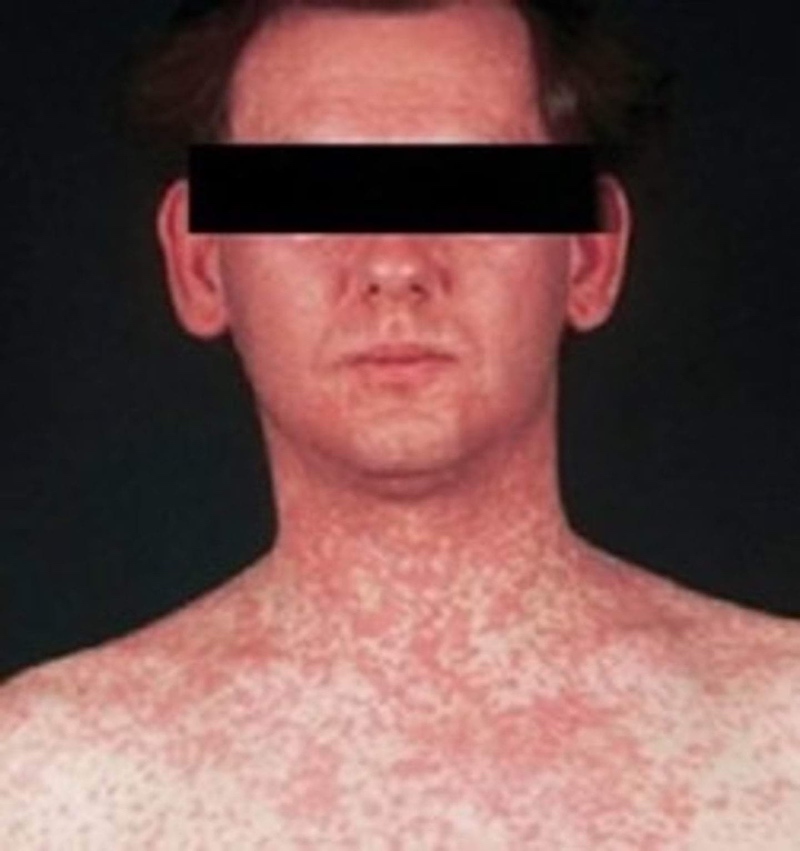
Measles is circulating in Australia again — and health authorities say many people don't know they're at risk.
Measles is circulating in Australia again — and health authorities say many people don’t know they’re at risk.
Australia ended 2025 with a measles problem it hadn’t seen in years. The country recorded 168 measles cases across 2025 — nearly triple the 57 cases reported in 2024, and well above the 26 cases in 2023.
Alerts remain active in multiple states. Queensland has reported nine measles cases so far in 2026 — five acquired overseas and four locally acquired, all linked to imported cases.
South Australia notified at least three cases by early February, including an infant who caught the infection overseas. Victoria’s health alert, first issued in February 2026, remains active as of the time of publication.
A March 2026 report from the Australian Centre for Disease Control confirmed that almost all cases are either acquired overseas or linked to an overseas-acquired case, with peaks clustering around school holiday periods.
But it’s the locally acquired cases that are drawing the most concern. When someone brings measles home from another country and then passes it to an unvaccinated person in Melbourne who has never left the country, the virus has found a foothold. That’s what health authorities are trying to stop.
A peer-reviewed analysis of a decade of Australian measles data, published in Communicable Diseases Intelligence in March 2026, underscored who is carrying the risk.
People aged 20 to 49 accounted for more than 57 per cent of all notifications between 2014 and 2024, and nearly 67 per cent of cases with known vaccination status had received no doses at all. These are not children too young to be vaccinated — they are adults who simply slipped through the gaps.
Globally, measles outbreaks are still occurring in every region of the world, which means the pressure on Australia’s borders isn’t easing. As long as international travel continues and vaccination rates stay below the 95% threshold needed for herd immunity, the conditions for further spread remain in place.
The MMR (measles-mumps-rubella) vaccine is one of the most effective vaccines available. After two doses, about 99% of people will be protected against measles for life. The problem is that a significant portion of Australians haven’t had both doses — and many don’t know it.
Australians born between 1966 and 1994 are considered to be at greater risk, as the second dose was only recommended from November 1992. Many people in this cohort received just one dose as children and assumed they were covered.
Measles vaccination coverage in Australia is currently below the 95% national target needed to prevent community spread. That gap is part of why the virus is finding new hosts.
People born before 1966 are generally protected — they would most likely have been infected with measles as children before the vaccine was available, giving them lifelong immunity.
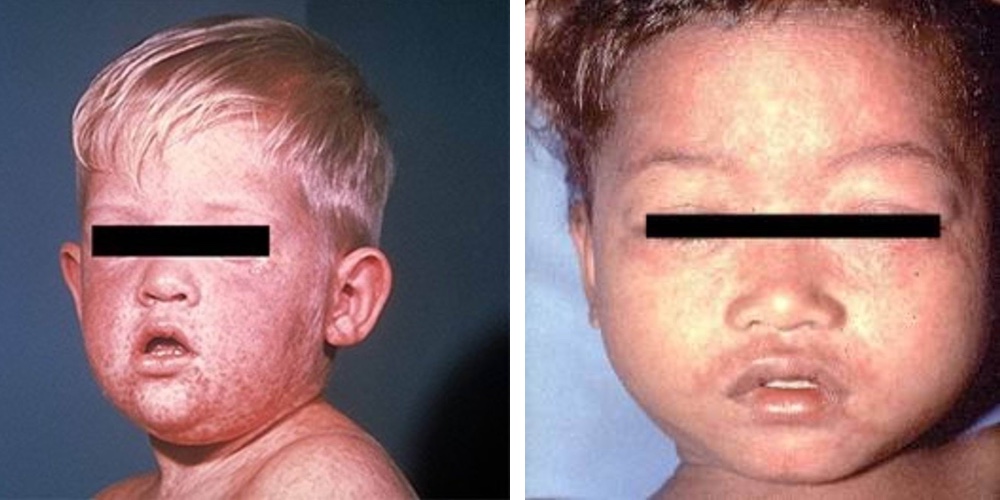
Symptoms usually appear 7 to 14 days after exposure and include rash, fever, a runny nose, cough and conjunctivitis. The rash typically starts on the face or neck before spreading across the body over three days.
Complications from measles are common and include ear infections, encephalitis — swelling of the brain — blindness and pneumonia. Children, pregnant women and people with weakened immune systems face a higher risk of serious complications.
Up to four in ten people with measles will need hospital care.
Measles also spreads with frightening ease. Each infected person can pass the virus to 12 to 18 others who aren’t immune, and the measles virus can survive in the air for two hours — meaning someone can inhale it even after an infected person has left the room.
For many South Asian migrants in Australia, the question is whether they were fully vaccinated and are protected against measles.
Australia gives the first measles dose at 12 months and a second at 18 months. Most South Asian countries give the first dose earlier — India, Bangladesh, Nepal and Sri Lanka all administer the first dose at 9 months of age.
That matters because a dose given at 9 months is less effective than one given at 12 months — the maternal antibodies haven’t fully cleared, so the immune response is weaker.
India has made significant progress on the second dose. Coverage with India’s second measles dose increased from 27% in 2011 to 82% by 2021. But that still leaves a large cohort of people — particularly those born before the mid-2000s when the two-dose schedule was inconsistently applied — who may have had only one dose, or a less effective early dose.
About 11.5% of children in India still receive no measles vaccination at all, and coverage gaps are significantly worse in northeastern states and among lower-income households.
Sri Lanka had measles outbreaks serious enough that its Ministry of Health launched a special district-by-district vaccination campaign in November 2024 in response to a rise in cases. Pakistan’s coverage has historically been lower than India’s and Bangladesh’s.
Many South Asian-Australians — especially those born between roughly 1970 and 2000 — genuinely don’t know if they are fully protected.
The Australian Immunisation Handbook specifically identifies migrants as a group needing attention for MMR catch-up.
Adult migrants, refugees and people seeking asylum may need vaccination, especially with MMR vaccine, and some refugees who received a dose as part of pre-departure screening may still need another dose on arrival. If a migrant has no valid documentation of vaccination, they should start a catch-up schedule.
South Asian migrants — particularly those who came through India or Pakistan — were vaccinated through paper-based systems, mobile health camps or supplementary immunisation campaigns that left no lasting record.
Even if they were vaccinated, they often can’t prove it, and the Australian system can’t verify it.
Australian research found that children of foreign-born mothers had persistently lower MMR vaccination coverage than children of Australian-born mothers, with inequalities increasing over time in both NSW and WA. So the gap doesn’t just affect first-generation migrants — it carries into the second generation.
Older South Asian migrants — those born before the 1970s or in rural areas before vaccination programs were widespread — may actually have stronger protection than they realise.
Many would have been infected with measles naturally as children, which does confer lifelong immunity. People who have contracted measles should have lifelong immunity afterwards. The problem is they don’t know this for certain either, unless tested.
The first step is to check your vaccination history, if it is available. If you were vaccinated in Australia, you can do this through your GP or via your Medicare records on myGov.
Anyone born in 1966 or later who has not had two doses of the MMR vaccine, or is unsure, should speak to their immunisation provider about a catch-up vaccination. The vaccine is free for eligible Victorians and is available through GPs, pharmacies, local councils and Aboriginal Health Services.
If you’ve been exposed to a confirmed case, time matters. People who are not fully vaccinated may be eligible to receive the MMR vaccine if they present within 72 hours of exposure.
Anyone planning overseas travel should ensure their measles vaccinations are up to date at least two weeks before departure. Large outbreaks are currently occurring across the region, including in Indonesia, Bali, Vietnam, Thailand, Cambodia, the Philippines, Malaysia, Singapore, Pakistan and India.
If you develop symptoms, don’t just show up to a clinic. Call ahead, let them know you may have been exposed to measles, and wear a mask. Measles is contagious before a rash even appears, and walking into a waiting room could put others at risk.
The vaccine is free, widely available and takes minutes. For most people, it’s one phone call to a GP. That’s all it takes.