Physical Address
304 North Cardinal St.
Dorchester Center, MA 02124
Physical Address
304 North Cardinal St.
Dorchester Center, MA 02124

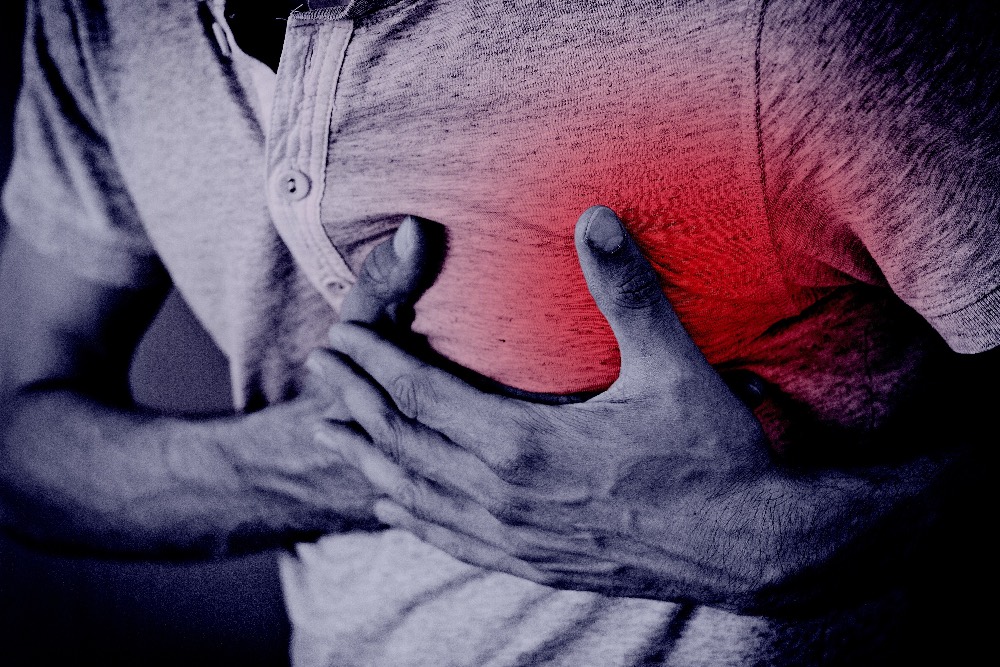
Scientists warn diabetes, obesity and alcohol are pushing South Asian communities - a fast-growing migrant community - in Australia toward a cardiovascular crisis — and the health system isn't keeping up.
The Hidden Heart Disease Crisis Among South Asians In Australia: Scientists warn diabetes, obesity and alcohol are pushing South Asian communities – a fast-growing migrant community – in Australia toward a cardiovascular crisis — and the health system isn’t keeping up.
One in seven or around fourteen percent of South and South-East Asian migrants living in Greater Sydney faces an elevated risk of a fatal or non-fatal heart attack or stroke within the next decade — and for those living with diabetes, that risk is nearly eight times higher than their peers.
Those are the findings of the first peer-reviewed study to formally map cardiovascular disease (CVD) risk among South Asian migrants in Australia, published in the International Archives of Cardiovascular Diseases by researchers from Central Queensland University, Deakin University, and the Australian National University.
The study examined 129 adults aged between 40 and 74, drawn from communities of Indian, Filipino, Sri Lankan, Pakistani, Nepali and Bangladeshi backgrounds living in Sydney’s south and southwest.
Using the World Health Organisation’s 2019 CVD risk prediction chart, researchers calculated each person’s probability of a serious cardiac event over the next ten years. While 86% recorded a low estimated risk, the remainder demonstrated elevated risk — a finding the authors describe as significant given the scale and pace of South Asian migration to Australia.
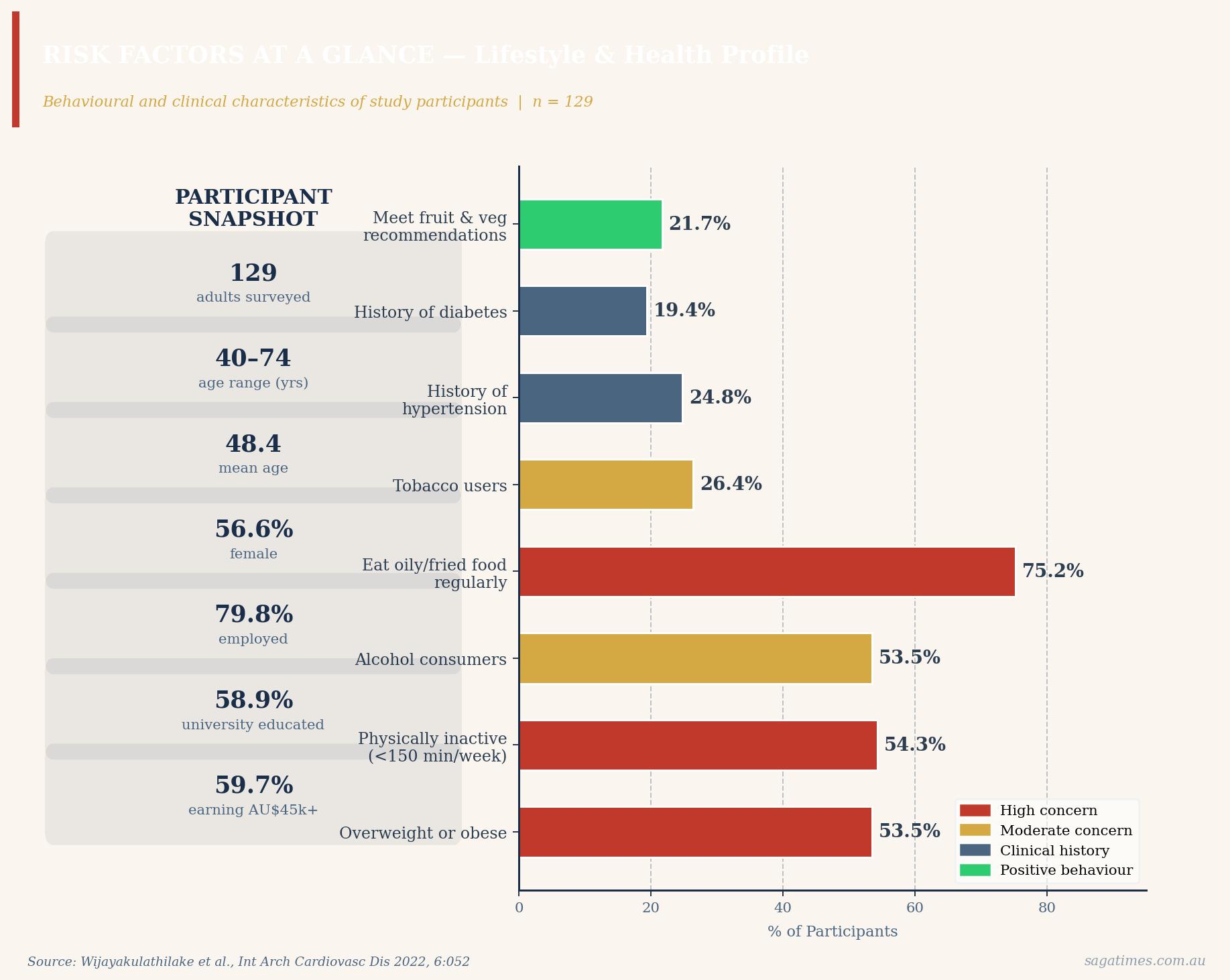
The participant group skewed educated and employed: nearly 60% held university qualifications, close to 80% were in paid work, and almost 60% earned AU$45,000 or more annually.
The majority — 56.6% — were women, with a mean age of 48 years. The largest nationality group was Filipino (34%), followed by Indian (22%), Sri Lankan (20%), Pakistani (11%), Nepali (10%) and Bangladeshi (3%).
Despite their relative socioeconomic stability, the group’s health behaviours told a more troubling story.
More than half — 54.3% — were not meeting the recommended 150 minutes of weekly physical activity, and 75.2% regularly consumed fried or oily food. Only one in five participants was eating the recommended five daily serves of fruit and vegetables.
The study’s multivariate analysis isolated three key predictors of elevated ten-year heart risk.
Participants with a personal history of diabetes were nearly eight times more likely to develop CVD — a finding consistent with evidence showing cardiovascular events are around 50% higher in South Asians with type 2 diabetes.
Those who were overweight or obese faced more than seven times the risk of their healthy-weight counterparts, while current alcohol consumers were over four times as likely to develop CVD.
The prevalence of alcohol consumption in the study was 53.5%, which researchers suggest may reflect the pressures of acculturation and socialisation after migration.
The findings arrive as Australia’s clinical framework for CVD assessment undergoes its most significant overhaul in over a decade.
The 2023 Australian Guideline for Assessing and Managing Cardiovascular Disease Risk — updated in 2024 — now explicitly recommends that clinicians consider reclassifying South Asian patients into a higher risk category, naming people of Indian, Pakistani, Bangladeshi, Sri Lankan, Nepali, Bhutanese and Maldivian descent.
The global picture is equally stark. Research published in Circulation found that individuals of South Asian ancestry — representing roughly 23% of the global population — face substantially higher rates of atherosclerotic cardiovascular disease compared with most other ethnic groups.
A 2023 review noted that South Asian populations have a higher prevalence of premature heart attacks than virtually any other population studied.
South Asian migrants have been among Australia’s fastest-growing population groups since 2006, expanding at roughly 28% per year, with the Australian Bureau of Statistics projecting continued growth in Sydney, Melbourne and Brisbane. Yet researchers warn this community remains dramatically underrepresented in health research and government prevention programs.
The study authors call for a direct response: culturally appropriate interventions to screen for CVD risk and address lifestyle behaviours — including programs that account for long working hours, limited support for physical activity, and traditional food cultures high in fat and salt.
Without targeted action, researchers warn, a community that has contributed enormously to Australian economic life faces a health crisis that is both predictable and preventable.